Summary
Battery Energy Storage Systems (BESS) are safe and reliable when designed and operated according to modern standards. The industry's approach to project location selection is to select sites, parcels, and addresses where the grid needs support. RIC Energy is a leader within the energy storage development market and is committed to leading with transparency and safety. RIC Energy works hand-in-hand with independent experts, including the Environmental Protection Agency (EPA) and New York Fire Department (NYFD). The most recent environmental testing and real-world experience show minimal risk to communities and the environment.
Written By Experts, for Communities

Photos provided by RIC Energy team of local project managers and community coordinators.
This blog was prepared by RIC Energy project managers with direct field experience, in collaboration with independent fire safety consultants, the Trump Administration’s EPA, and the New York Fire Department.
Our goal is to provide clear, factual information and address common misconceptions about battery energy storage systems.
Learn more about our team and mission: RIC Energy About Us
Why Battery Energy Storage Matters
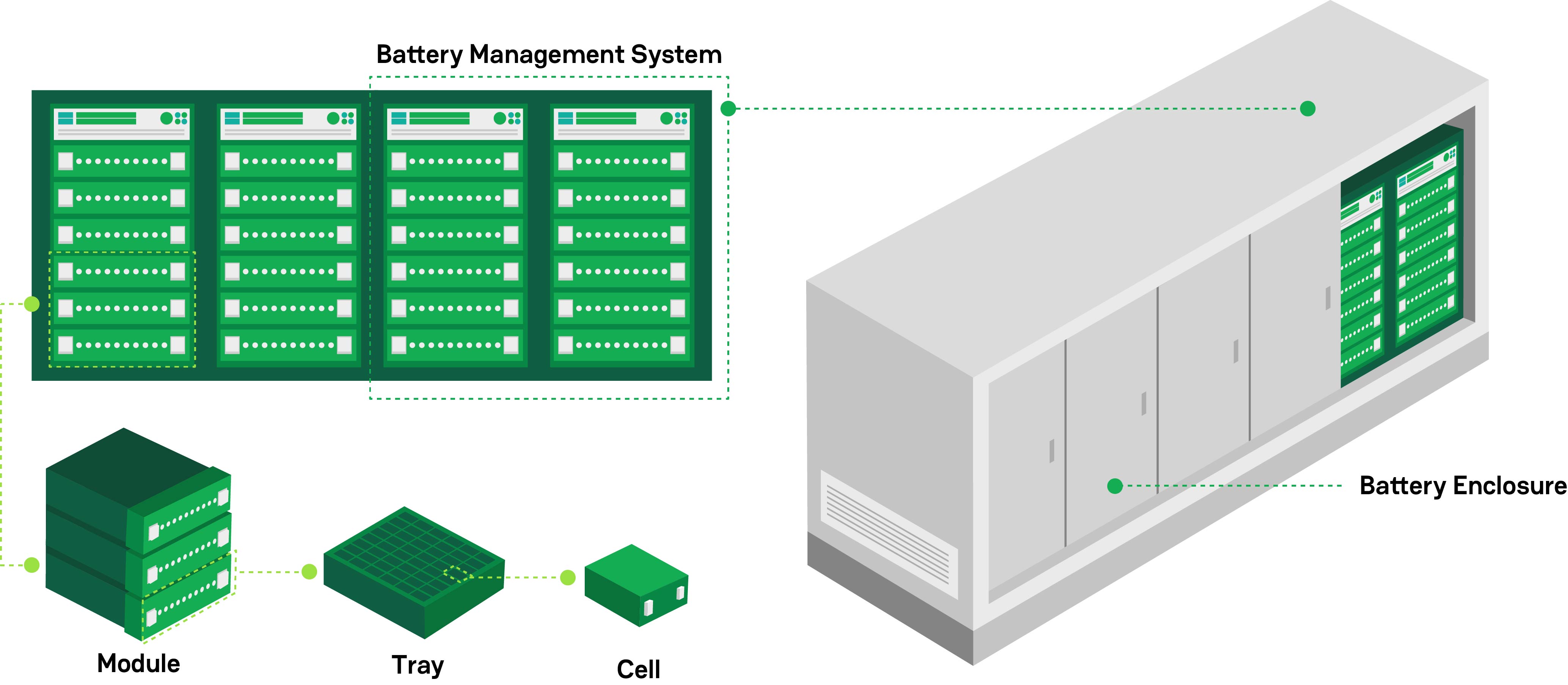
A battery energy storage system (BESS) stores electricity—often from renewable sources like solar—so it can be used later when demand is high or when the sun isn’t shining. These systems play acritical role in supporting a reliable and resilient power grid. By storing excess energy and delivering it when it’s needed most, battery storage helps balance supply and demand, reduce strain on the grid, and prevent outages. It also allows for greater use of clean energy by making it available around the clock, not just when it’s being generated. Watch our battery energy storage YouTube video below to learn more about our approach to developing these important projects.
Community Scale Projects
The majority of energy storage projects being proposed in villages and towns are distributed generation projects, meaning they are intentionally placed near where energy is used to relieve stress on the local grid. Theses projects are typically around 5 MW in size, and smaller projects like this (unlike large utility-scale facilities) provide localized benefits: faster interconnection, reduced transmission losses, and stronger reliability during peak demand. These sites are selected based on grid need, access, and safety criteria, not simply convenience. Community scale battery energy storage systems have a small footprint -- typically around the size of one or two tennis courts.
RIC Energy's Safety Leadership
Proactive Safety Measures
- Designing for Safety: Projects anticipate and incorporate evolving codes and best practices.
- Continuous Improvement: Lessons learned from global incidents drive upgrades in procedures and hardware.
- Community Engagement: Transparent communication, public briefings, and open Q&A sessions.
Local Benefits:
- Supports local grids and stabilizes energy costs.
- Generates significant tax revenue for schools and emergency services.
- Restoration commitment: Land is restored to its original state at lease end.
Failure Incidents Are Rare and Decreasing

- Incidents are rare and decreasing globally. Improved technology and safety protocols have led to a 97% drop in global battery energy storage failure rates since 2018.
- (Source: https://storagewiki.epri.com/index.php/BESS_Failire_ Incident_ Database) Summary
- In the last decade, the number of BESS in the United States has increased exponentially — from 50 in 2015 to 820 now, yet the number of failures has not increased; in fact, it decreased to just eight worldwide last year.
- Safe failure design: In rare cases of thermal events, containment measures prevent spread and environmental impact.
Regular Industry Training for Fire Departments
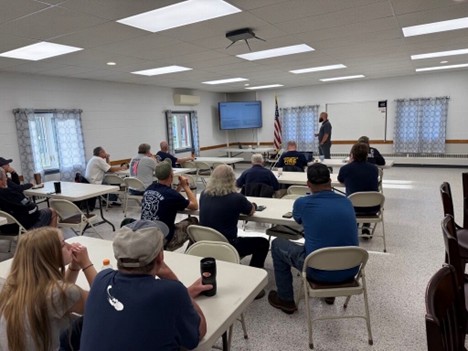
While the development of battery energy storage systems is growing, RIC Energy is offering training to full time and volunteer fire departments.
Attendees speak highly of the training staff, all former firefighters and lithium-ion experts who regularly train municipal firefighters on emergency procedures.
Onewsquethaw Fire Department, Energy Safety Response Group (ESRG) and RIC Energy conducted a fire department training for BESS projects.
How Battery Energy Storage Systems Keep Communities Safe
- Multiple Layers of Protection: Modern facilities feature temperature controls, fire suppression systems, remote monitoring, and robust containment.
- Rigorous Testing: UL 9540 and UL 9540A fire behavior testing, plus mandatory peer review for large systems.
- Continuous Monitoring: 24/7 remote monitoring, thermal imaging, and central station oversight.
- Compliance with Leading Codes: New York Fire Department fire code (among the nation's strictest) NFPA 855, and EPA guidelines.
- Emergency Preparedness: Site-specific emergency response plans, annual updates, and first responder training.

Written by Andy Welch, RIC Energy North America's Director of Development in coordination with ESRG.
Photos provided by RIC Energy team of local project managers and community coordinators.
Frequently Asked Questions
Are BESS projects safe?
Yes, when designed, installed, and operated according to rigorous industry standards and local regulations, battery energy storage systems (BESS) are safe and reliable. With all RIC Energy's projects involving electricity and energy storage, they require careful planning and proper safety measures.
Modern battery systems are equipped with multiple layers of safety protections, including temperature controls, fire suppression systems, and remote monitoring. We work closely with fire departments, local permitting authorities, and engineering experts to ensure each project meets or exceeds all safety codes and minimize risk.
Will the project contaminate water or soil?
No. Batteries are sealed units; environmental testing confirms no contamination. BESS projects use solid battery cells that, like in cell phones, do not contain any liquids that could contaminate water systems.
Can the system be shut down in an emergency?
Yes. BESS projects are monitored remotely 24 hours a day. The facility can be disconnected remotely by the project operator and the utility. It can be disconnected remotely by the project operator and the utility. It can also be disconnected locally by the utility and potentially first responders (if they choose to accept the training to do so). In any event, contact information is provided to the local first responders so they can reach the 24-hour operators to request disconnect.
What happens if a battery is struck by lightning?
A sophisticated grounding design will be put in as part of construction and installation. This will provide protection to assure that the energy from a lightning strike is not transferred into the battery system.
Is it safe to live near a battery energy storage system?
When properly designed and regulated, BESS can operate safely near residential areas just like all electronic transmission and distribution systems owned by the utilities. Systems include safety features and emergency protocols to protect nearby residents if an incident occurs.
Learn more:
- RIC Energy Battery Storage
- RIC Energy About Us
- NY Fire Safety Declaration
- New York's Inter-Agency Fire Safety Working Group
- Trump Administration EPA BESS Guidance